When Modules Stop Talking: CAN Bus Network Diagnostics
Several warning lights at once and modules that won't respond usually mean a network fault. How specialists diagnose CAN bus communication problems.
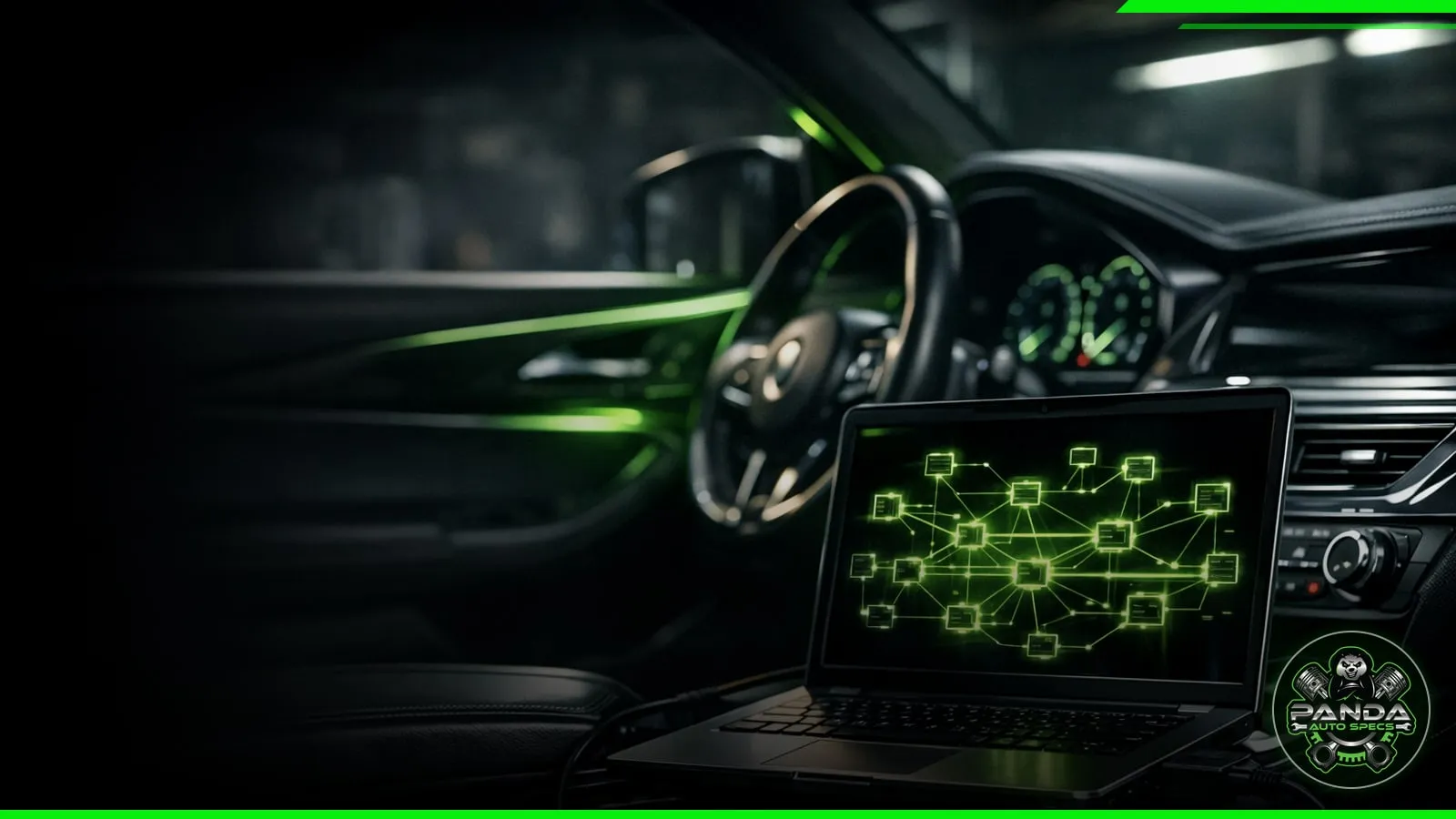
The dashboard lights up like a holiday display. ABS, traction control, airbag and check engine lights all come on together. The transmission goes into limp mode. The gauge cluster freezes. It looks like half the car failed at once.
Usually, it didn’t. The modules are fine. They just can’t talk to each other.
What the CAN bus actually is
A modern vehicle can have dozens of control modules: engine, transmission, brakes, body, airbags, steering, climate, infotainment and more. Instead of running a separate wire for every piece of shared information, these modules communicate over networks. The most common is the Controller Area Network, or CAN bus.
A CAN network is typically a twisted pair of wires, CAN high and CAN low, that every module on that network connects to. Messages travel as voltage differences between the two wires. At each end of the network sits a termination resistor, so the combined resistance across the network is usually around 60 ohms when it is healthy.
Many vehicles have several networks running at different speeds, linked through a gateway module. A powertrain network, a body network and a chassis network might all be separate, each with its own wiring.
Why one fault takes down many systems
If the network wiring shorts to ground, shorts to power or breaks open, messages stop getting through. Every module that depends on those messages sets codes for “lost communication”. A single shorted module can also drag the whole network down, so modules that are working perfectly report each other as missing.
This is why network faults are so often misdiagnosed. Replacing the module named in the code rarely helps when the real problem is the network the module lives on.
How we diagnose network faults
Map the network
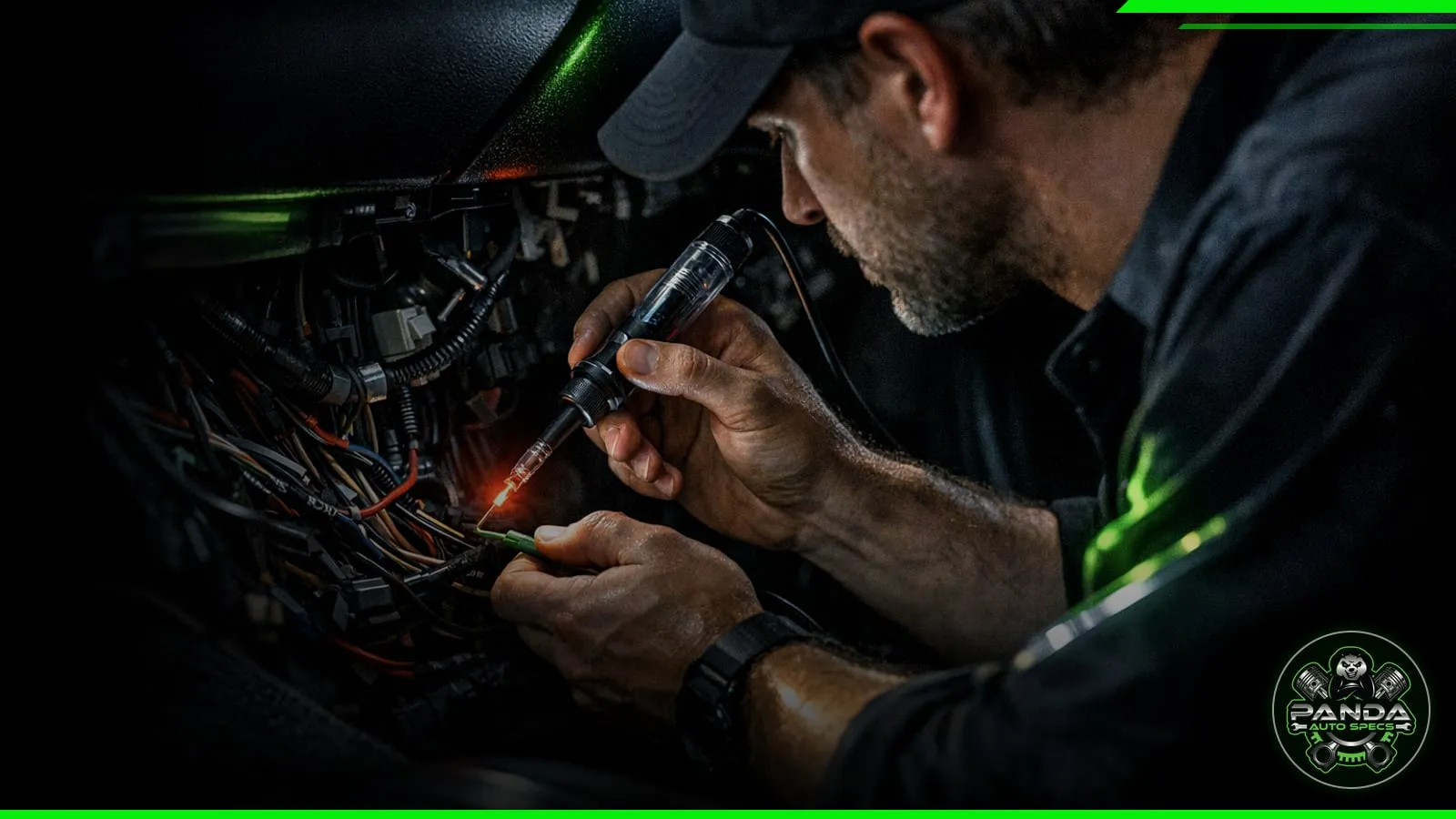
We start with the wiring diagram for that exact vehicle. It tells us which modules share which network, where the terminating resistors are, and where the splice packs and connectors sit. Without the map, network diagnosis is guesswork.
Scan everything
A full-system scan shows which modules respond and which don’t. The pattern is a clue. If every module on one network is silent while others answer, the fault is on that network. If only one module is silent, the problem is more likely its power, ground or its own connection to the network.
Measure the network
With the battery disconnected, resistance across CAN high and CAN low tells us whether the terminating resistors and wiring are intact. A reading of about 120 ohms suggests one end of the network is open. Very low resistance points to a short between the two wires.
With the system powered, we check the voltage on each wire. Healthy CAN wires sit around the middle of the supply voltage and move in opposite directions as data passes. A wire stuck at zero or at battery voltage is shorted.
Look at the signal
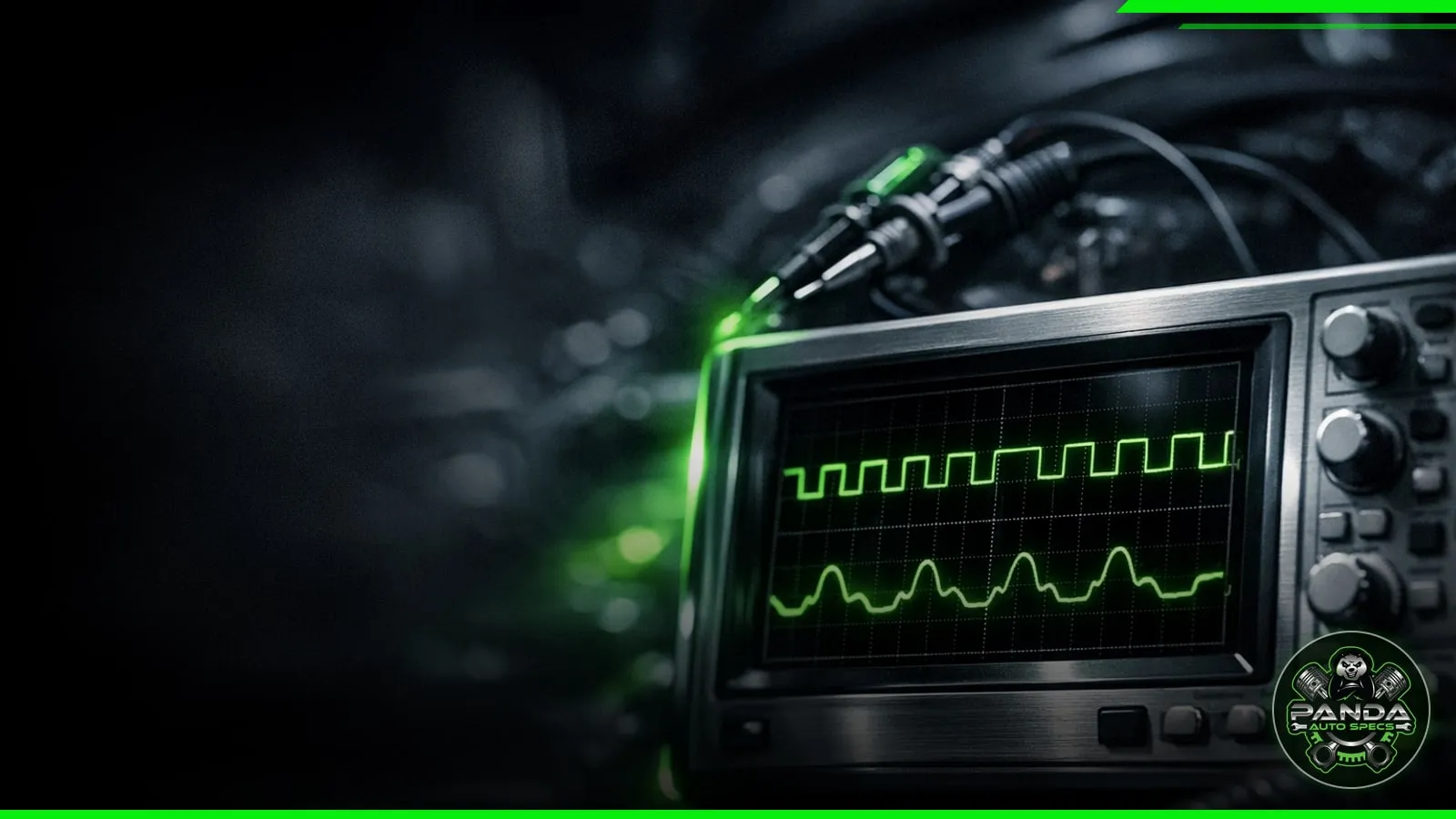
A lab scope shows the actual data on the network. A clean network shows crisp, mirrored square waves on the two wires. Noise, distorted edges or a missing wire pattern tell us what kind of fault we are dealing with.
Isolate the culprit
If one module is pulling the network down, we disconnect modules one at a time, often at a splice pack or connector, while watching the network. When it comes back to life, we have found the module or the wiring branch causing the problem.
Common causes we find
- Water intrusion into a connector or module
- Damaged wiring from previous collision or body repairs
- Aftermarket accessories spliced into network wires
- A failed module shorting the network internally
- Low battery voltage or poor grounds confusing every module at once
That last one deserves attention. Before chasing a network, we always confirm battery health, charging voltage and the main grounds. Modules behave strangely when their power supply is unstable.
After the repair
Once the network is restored, we clear codes in every module, confirm all of them communicate, and complete any calibrations the car needs, such as steering angle resets. A network repair is not finished until the whole car is talking again.
If your vehicle has a dashboard full of warning lights and a history of replaced modules that didn’t fix it, the network is the first place we would look.