Cylinder Head Repair After Overheating: Warpage, Cracks and Head Gaskets
An overheated engine can warp or crack the cylinder head. How specialists inspect, machine and rebuild the head so the head gasket repair actually lasts.
An overheating episode can last only a few minutes, but the damage it causes can stay with an engine for good. Aluminum cylinder heads, used in almost every modern engine, are especially sensitive to heat.
The most common result is a failed head gasket. The most common mistake is replacing only the gasket.
What overheating does to a cylinder head
Aluminum expands much more than the iron or steel parts around it. When an engine overheats, the head can distort permanently. Even a few thousandths of an inch of warpage is enough to stop a new head gasket from sealing.
Severe overheating can also:
- Crack the head between valve seats or near coolant passages
- Loosen or damage valve seats and guides
- Weaken head bolts, which stretch and lose clamping force
- Score camshaft journals if oil breaks down from the heat
Signs of head gasket or cylinder head damage
- White smoke from the exhaust, often with a sweet smell
- Coolant loss with no visible leak
- Milky residue in the oil or under the oil cap
- Bubbles in the coolant reservoir or overheating under load
- Misfire on one cylinder after the engine sits, from coolant entering the cylinder
We confirm with a combustion leak test, which detects exhaust gas in the coolant, along with cooling system pressure tests and leak-down testing.
Why “just the gasket” fails
A head gasket can only seal flat surfaces. If the head is warped, a new gasket will leak again, sometimes within weeks. If the head is cracked, nothing short of repair or replacement will fix it.
That is why a proper head gasket repair includes the cylinder head itself.
What a proper repair includes
Inspection and measurement
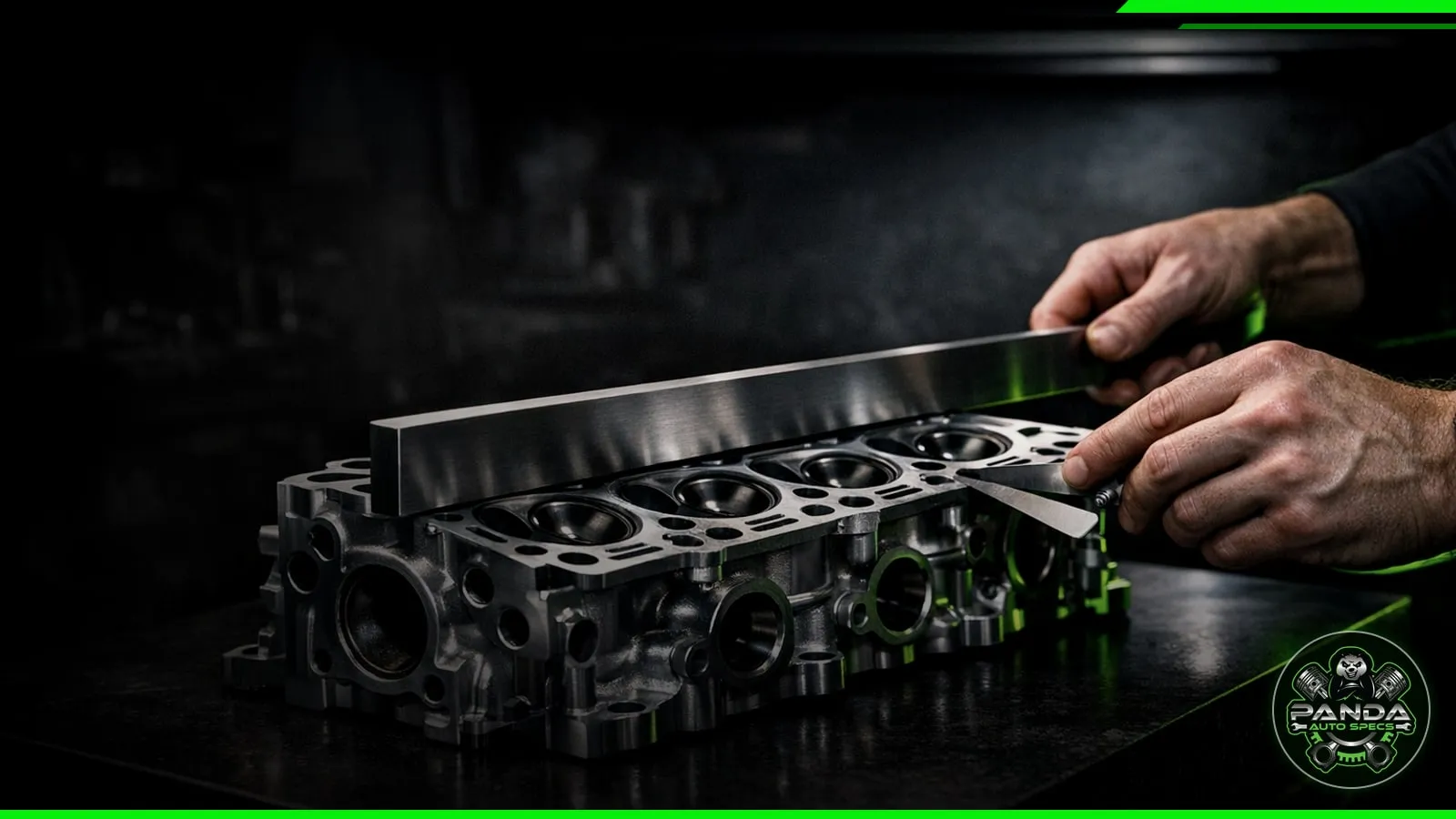
After removal, the head is cleaned and checked for flatness with a precision straightedge and feeler gauges, in several directions across the surface. The block deck is checked the same way. The head is inspected for cracks, and pressure tested when needed.
Machine work
A warped head is resurfaced to restore a flat, smooth surface with the correct finish for the gasket. There is a limit to how much material can be removed, so the head is measured again afterward to confirm it is still within specification.
Valve work
With the head off, valves, seats and guides are inspected. Valve jobs, new seals and seat repairs are done here, because this is the only time they are accessible without another major teardown.
New hardware
Many modern engines use torque-to-yield head bolts that are designed to stretch once. They must be replaced. Reusing them is a common cause of repeat failures.
Correct reassembly
Gaskets go on clean, dry surfaces. Bolts are tightened in the factory sequence and specification, often in several stages with final angle turns. Timing components are set exactly, and the cooling system is bled carefully to remove air pockets that could cause another overheat.
And fix why it overheated
A failed water pump, radiator, thermostat, fan or a leaking hose started the problem. Fixing the head without fixing the cause is a guaranteed repeat. We find and repair the root cause as part of the job.
The takeaway
If your engine has overheated, stop driving it and get it checked. The sooner a head gasket problem is caught, the more likely it is that the head can be saved. And when it is repaired, make sure the head is measured and machined, not just bolted back on.